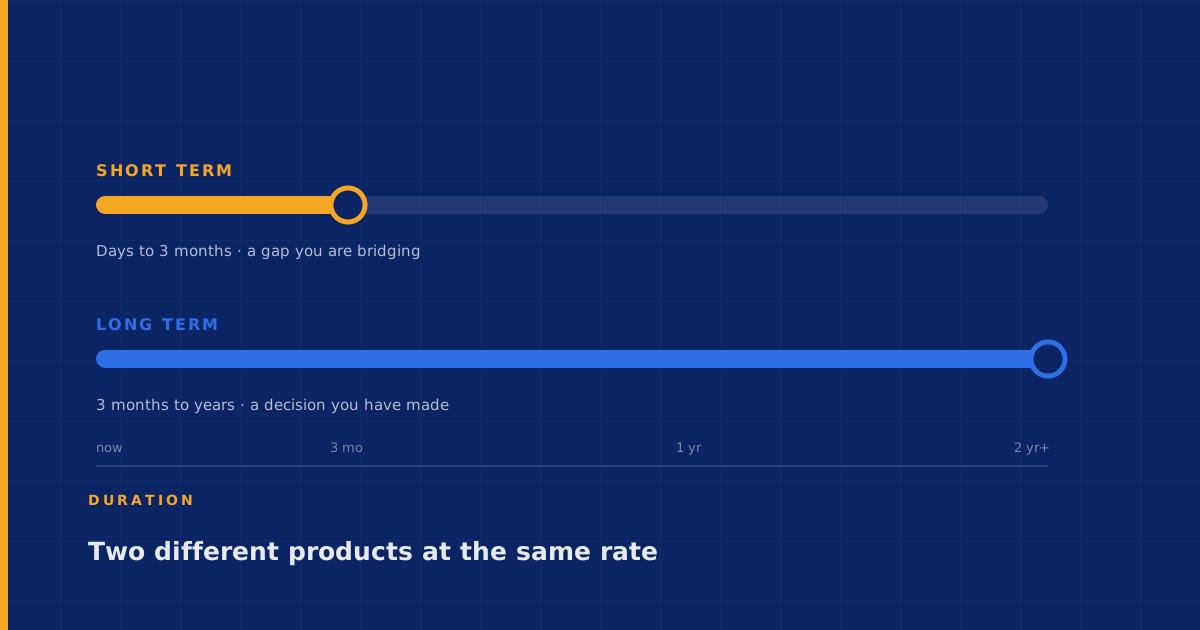
Where the line actually sits
There is no official definition, but in practice the behaviour changes at around three months.
- Short-term is a gap you are bridging — days to about three months. A tenancy gap, a renovation, a summer away, a delayed shipment. You know roughly when it ends.
- Long-term is a decision you have made — three months to years. Keeping furniture while you live somewhere furnished, holding a household during a posting, storing things you will want later but not soon.
The useful test is not the number of months. It is whether you know the end date. A ‘six-week’ storage booking with no confirmed end date behaves like long-term storage, and should be planned like it.
What matters for short-term storage
Flexibility beats rate. You are solving a temporary problem, and the risk is being locked into a term longer than the problem. Check there is no lock-in and no notice period before you compare monthly prices.
Collection and return handled for you. The point of a short gap is that you are already moving twice. Doing the lifting yourself twice more is what you are paying to avoid.
Access to a few specific things. Over six weeks you will almost certainly want one item back. Pack the likely candidates last and tell whoever is storing them.
Speed of setup. Short-term bookings are usually made under time pressure, often against a fixed handover date. Confirm the collection slot early — timing is confirmed based on availability, and end-of-month slots go first.
What matters for long-term storage
Environment beats everything. Over two years, temperature control stops being a nice-to-have. Dubai summers are severe, and an unconditioned unit will warp wood, crack leather, lift veneer and deform anything with adhesive in it. Over six weeks you might get away with it. Over two years you will not.
Preparation quality. The shortcuts that survive six weeks fail over two years: a sofa sealed in plastic, a mattress on its edge, a fridge stored with a trace of water in the drum. Long storage is where preparation earns its keep. See preparing furniture for storage.
The inventory, seriously. After two years you will not remember what you stored. This is where a photo and video inventory stops being a nice feature and becomes the only way to know what you have.
Total cost, honestly assessed. This is the uncomfortable one. At AED 1,200 a month, two years of one-bedroom storage is a substantial sum. For mid-range furniture, that can exceed the cost of replacing it. Long-term storage makes sense for things that are genuinely worth more than the storage — quality furniture, items you cannot replace, things with real personal value. It makes less sense for a three-year-old flat-pack wardrobe.
A straight cost comparison
Using the published Smart Space rates, excluding 5% VAT, for a one-bedroom's contents:
| Duration | Storage | Packing & transport | Total before return delivery |
|---|---|---|---|
| 6 weeks | AED 1,800 | AED 2,400 | AED 4,200 |
| 3 months | AED 3,600 | AED 2,400 | AED 6,000 |
| 6 months | AED 7,200 | Free if paid upfront | AED 7,200 |
| 12 months | AED 13,680 (5% off) | Free if paid upfront | AED 13,680 |
Two things fall out of that table. First, the one-off packing and transport charge dominates a short booking and is almost irrelevant to a long one — which is why the upfront-payment incentives are structured the way they are. Second, return delivery is not in the table: it is quoted separately and charged in addition, unless it is included in your agreed package. Ask for it upfront so your total is a real total.
Which one you are actually buying
- You have a confirmed end date within three months. Short-term. Prioritise no lock-in and a collection slot you can rely on. Pay monthly.
- You have a confirmed end date beyond six months. Long-term. Pay upfront — six months upfront makes collection free and twelve months takes a further 5% off — and prepare everything properly.
- You do not have an end date. Treat it as long-term regardless of what you hope. Prepare accordingly, and set yourself a date to review whether what is stored is still worth what it is costing.
Want this priced for your place?
Send a few photos of the rooms on WhatsApp. We come back with the size, the cost and a collection slot — before you commit to anything. Storage from AED 500 a month, excluding VAT, with no lock-in contract.
Get a quote on WhatsAppOr read more about Managed storage in Dubai.